Packaging Knowledge · Material Guide
Cold Seal vs Heat Seal: One Word Makes a Big Difference
📅 January 15, 2026
✍️ Shenying Packaging
📖 ~5 min read
In flexible packaging, cold seal and heat seal sound almost identical — but they work in completely different ways. Choosing the wrong material can slow down production or even cause your entire batch to be rejected.
This guide breaks down the key differences in sealing principles, applications, equipment requirements, and cost. By the end, you will know exactly which material fits your product.
1. Different Principles: Pressure vs Heat
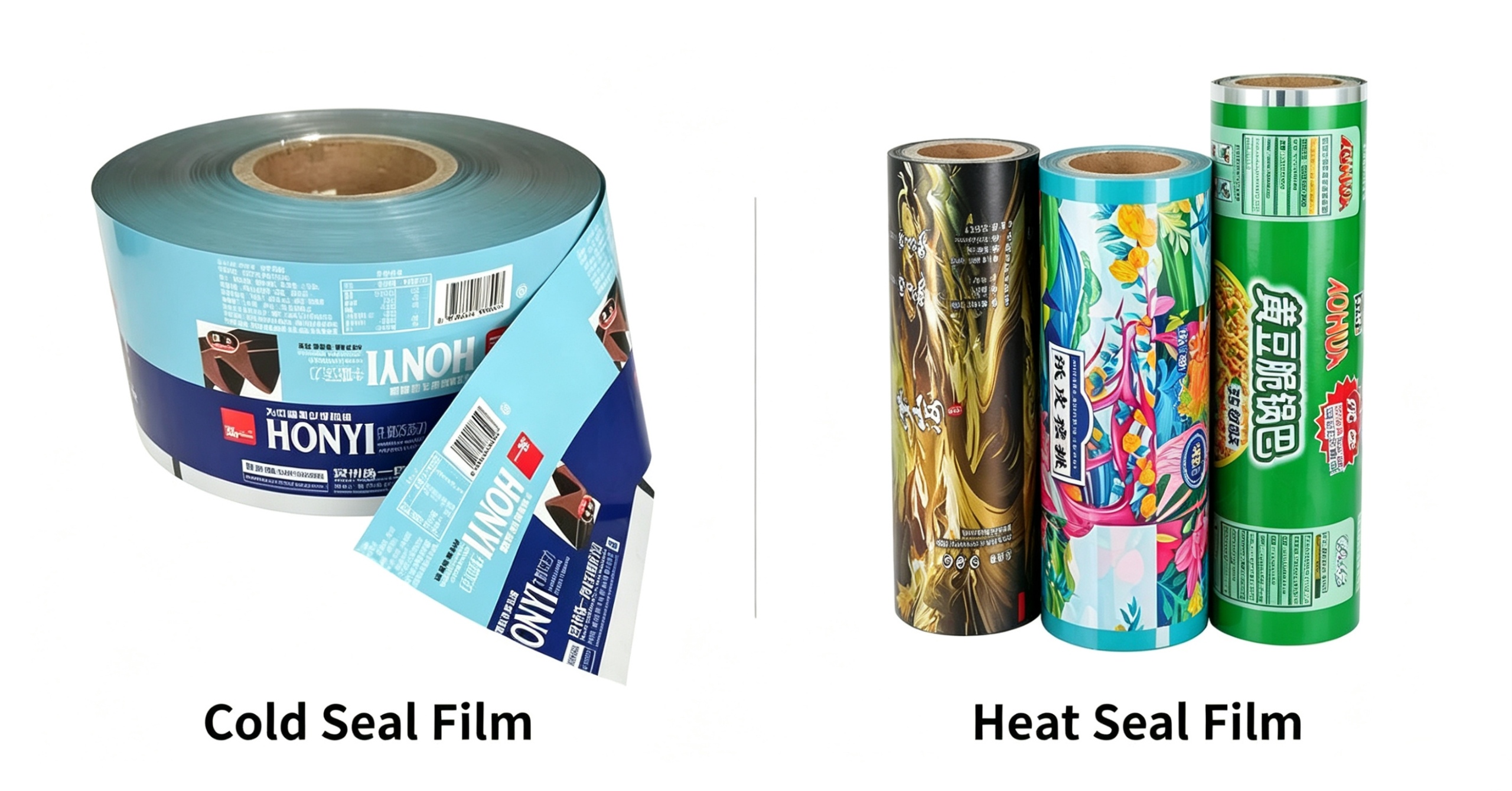
Heat seal is the most common type of packaging. It requires heat — typically between 120°C and 180°C — to melt the surface layer of the film so that it bonds to itself. Most food packaging you see, such as biscuits, potato chips, and instant noodles, uses heat seal film.
Cold seal requires no heat at all. A special pressure-sensitive adhesive (usually natural latex or synthetic rubber-based) is pre-coated onto the film. At room temperature, applying pressure alone makes the adhesive layers stick together. Cold seal is ideal for products that are sensitive to heat.
💡 One sentence summary: Heat seal bonds by "melting" the film. Cold seal bonds by "pressing" the adhesive.
2. Key Specifications Comparison
| Comparison Aspect | Heat Seal | Cold Seal |
|---|
| Sealing Principle | Heat melts the film surface to create bond | Pressure activates pre-coated adhesive |
| Heat Required | ✅ Yes (120-180°C) | ❌ No |
| Product Temperature Tolerance | Product must withstand high heat | Ideal for heat-sensitive products (chocolate, ice cream, pharmaceuticals) |
| Packaging Equipment | Standard heat seal packaging machine | Cold seal专用 machine or modified pressure system |
| Material Cost | Lower (about 20-30% less) | Higher (additional adhesive coating) |
| Production Speed | Fast and mature | Slightly slower, but irreplaceable for some products |
| Typical Applications | Cookies, chips, instant noodles, frozen food | Chocolate, ice cream, cheese, medical devices, electronics |
}
3. When Must You Use Cold Seal?
Cold seal is the right — and often the only — choice in these situations:
- Heat-sensitive products: Chocolate, ice cream, butter, cheese, and some pharmaceuticals can melt or degrade under heat seal temperatures.
- High-speed flow wrap lines: Cold seal runs well on high-speed horizontal flow wrappers without the delay of heating and cooling cycles.
- Products that cannot have residual heat: Some electronic components, medical devices, or chemical products cannot tolerate any heat exposure — even brief contact.
4. When Is Heat Seal the Better Choice?
- Cost-sensitive projects: Heat seal films are significantly cheaper because no special adhesive coating is required.
- Wide material selection: Heat seal works with many materials (PE, PP, PET, aluminum foil, etc.) and can be customized for barrier properties (moisture, oxygen, light).
- High-temperature filling lines: If your product is filled hot (like soup or coffee), heat seal integrates seamlessly.
⚠️ Important: Do not try to run cold seal film on a standard heat seal machine without modification. The heat will degrade the pressure-sensitive adhesive and cause seal failure. Contact us for machine compatibility advice.
5. Quick Selection Guide
Use this decision flow to pick the right material:
- Your product is heat-sensitive (melts/degrades under 50°C) → Choose Cold Seal.
- Your product is not heat-sensitive AND cost is a major concern → Choose Heat Seal.
- You need high barrier properties (oxygen/moisture) AND use cold seal → consult us; hybrid solutions exist but cost more.
6. Real-World Example
A chocolate manufacturer once tried using standard heat seal film to save cost. During summer production, the line kept stopping because chocolate near the seal area softened and created leakers. After switching to cold seal film (with the same barrier structure), the problem disappeared. The slightly higher material cost was offset by lower downtime and waste.
❓ Not sure which seal type fits your product?
We offer free material recommendations based on your product, filling temperature, and line speed.
Contact Our Packaging Engineers →
Both cold seal and heat seal have their place. The key is understanding your product's constraints — especially temperature sensitivity — and matching them with the right material. When in doubt, let us help you test both options.